
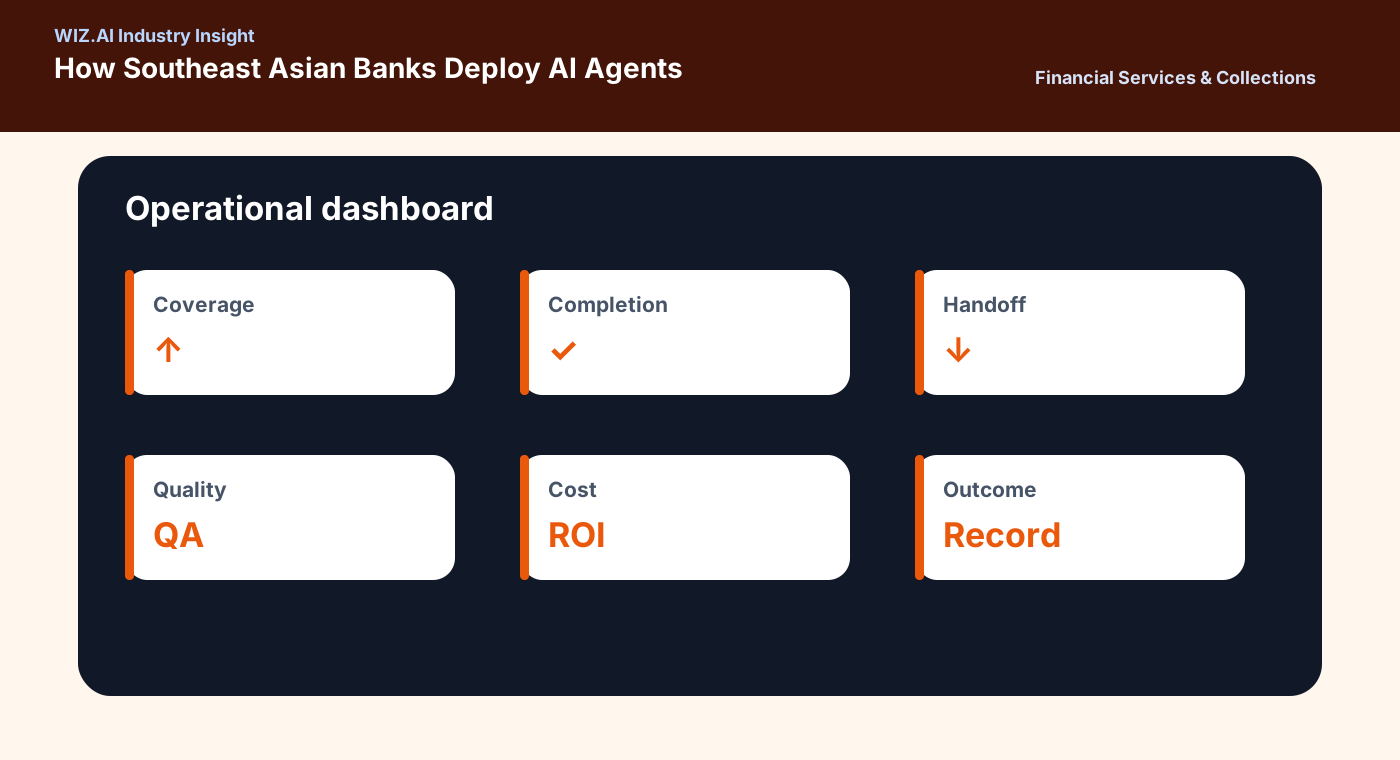
Banks in Southeast Asia should begin AI-agent deployment with focused, measurable journeys. Good starting points include onboarding, account activation, payment reminders, document collection, customer verification, and service follow-up.
The deployment model should define success before launch. Teams need baseline metrics, target outcomes, escalation rules, compliance requirements, and integration points with CRM or core service systems. Language localization is also essential because customers may respond in local languages, English, or both.
WIZ.AI can position itself as a partner for this full path: use-case design, virtual-agent configuration, localized voice experience, operational monitoring, and scale-up. This makes the content useful for both business and technology teams.
How WIZ.AI Should Frame the Proof
Financial-services content should balance growth, efficiency, and control. Buyers in this sector are not only looking for automation; they need evidence that the automation can operate with auditability, appropriate escalation, data protection, and customer sensitivity. WIZ.AI should make those operating controls visible.
A strong article should show where virtual agents fit in the service model. They can handle repeatable outreach, collect structured responses, remind customers, confirm information, and surface cases that require human attention. The message should not be that AI replaces the bank or finance team. The message is that AI gives the team more controlled capacity.
Buyer Takeaway
For financial institutions, the value of WIZ.AI is strongest when automation is reliable enough for production but flexible enough for local language and customer nuance. The buyer should see a path to lower cost, wider coverage, and better follow-up without weakening trust.
Related insights
Continue the thread
References
- Everest Group. (2025). Conversational AI and AI agents in CXM products PEAK Matrix 2025. https://www.everestgrp.com/report/egr-2025-21-r-7583/
- Salesforce. (2025). State of service report. https://www.salesforce.com/resources/research-reports/state-of-service/
- Zendesk. (2026). 2026 CX trends report. https://www.zendesk.nl/newsroom/articles/ai-ushers-in-era-of-contextual-intelligence-redefining-customer-experience-in-2026/