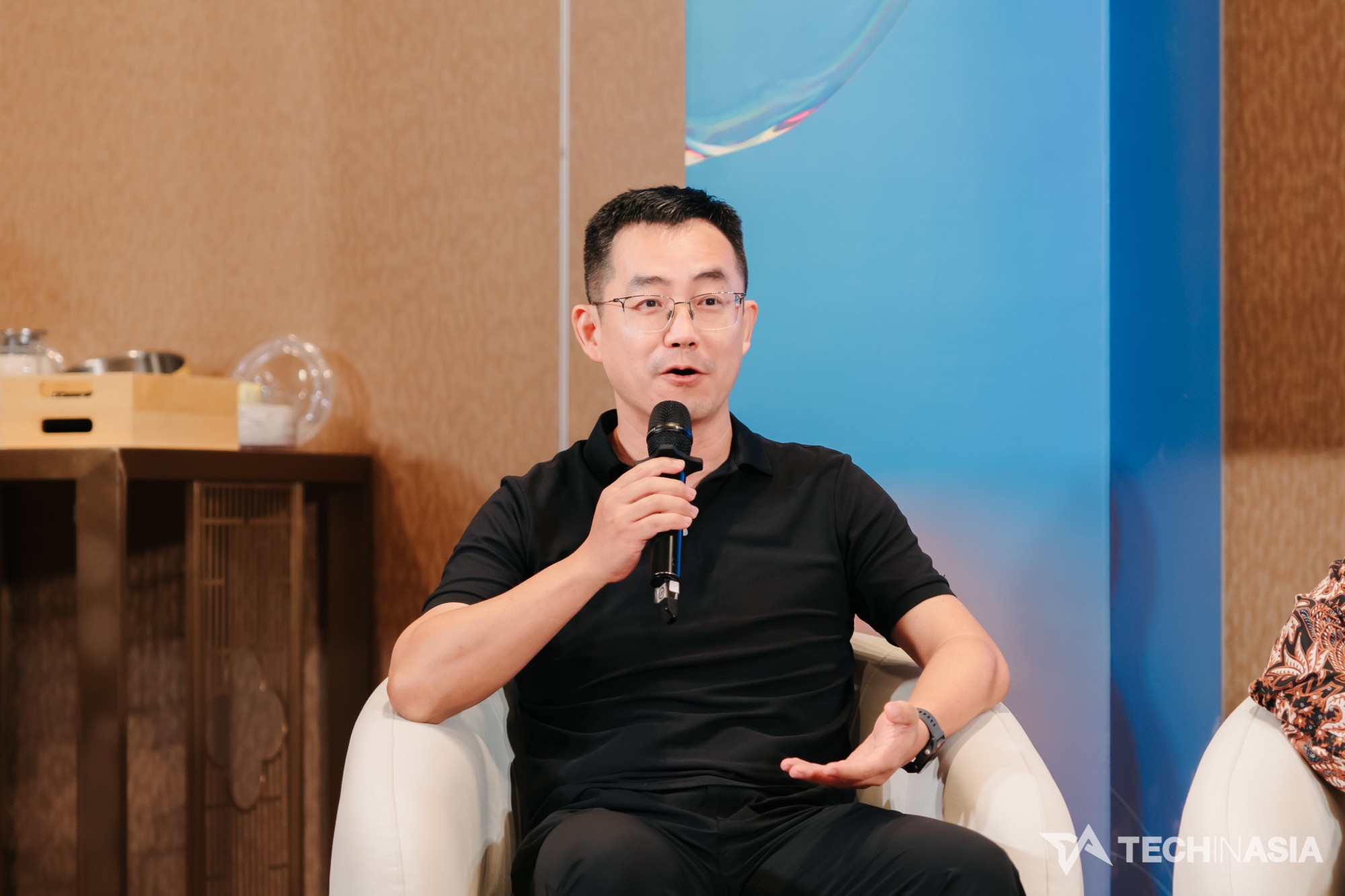
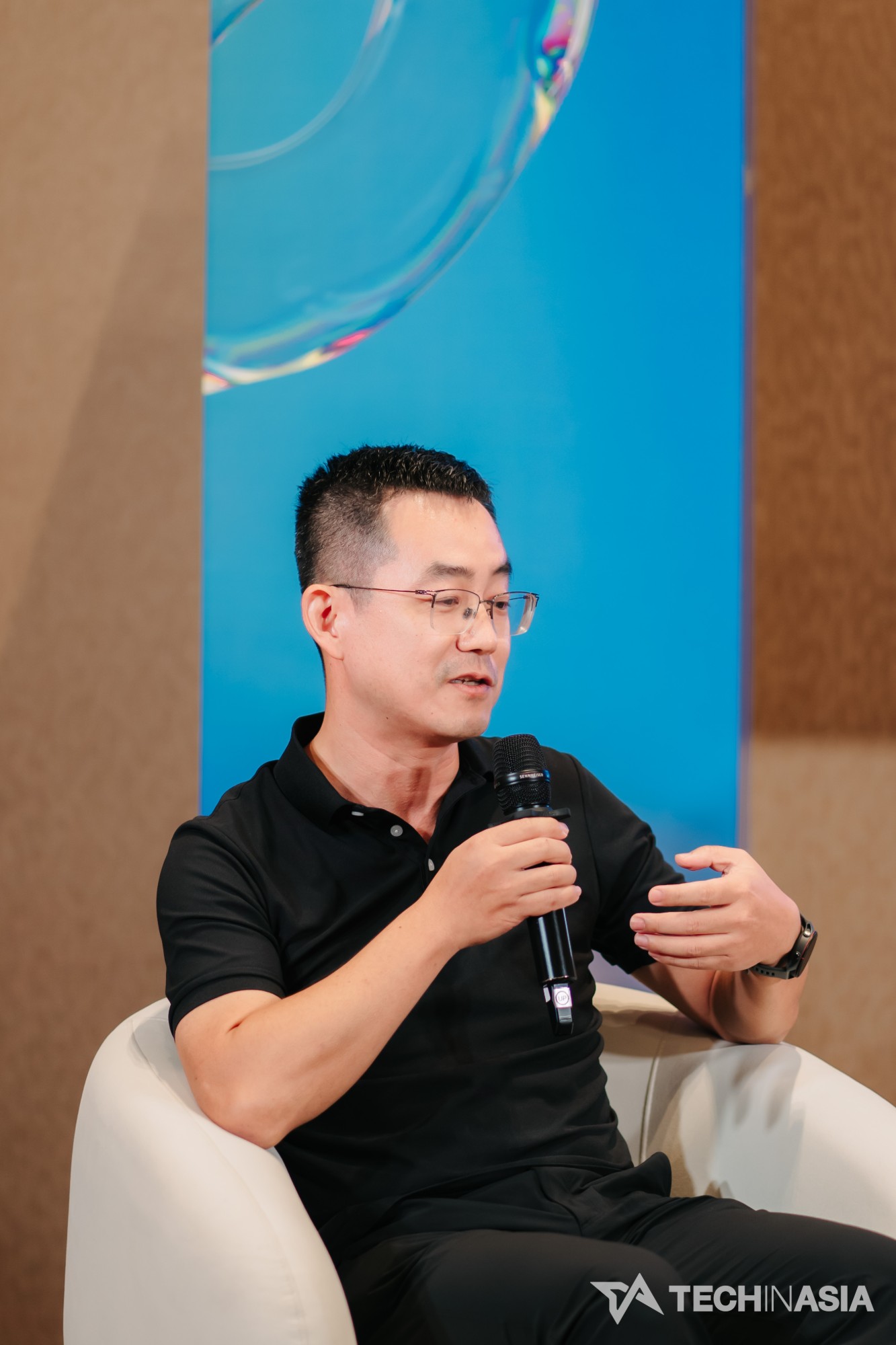
Tech in Asia Conference returned to Singapore's Sands Expo and Convention Centre for its 15th edition on 15–16 September 2026, bringing more than 2,000 enterprise and technology leaders together under the theme “Lead the Enterprise AI Era.” Among the event's discussion-led Strategy War Room sessions — a 20-minute moderated panel followed by 25 minutes of direct exchange with the audience — Robin Li, WIZ.AI's Senior AI Strategy & Partnership Director, joined Irzan Raditya of Kata.ai and Shauna Bull of Sierra for a conversation moderated by Sue Stephens of Bluente on a single question: what does it actually take to run enterprise AI across eleven very different Southeast Asian markets?
The panel's throughline mirrored what WIZ.AI sees daily deploying Wizlynn and Talkbot for customers across the region: the hard part of regional AI is rarely the model. It's the localization, the governance, and the last mile of getting an agent to work reliably on a real customer call. Four themes carried the discussion.
Localization is more than translation
The biggest mistake enterprises make moving an AI solution from one market to another is treating localization as translation rather than redesigning the customer journey. Take a simple appointment reminder on WhatsApp: in one market the customer taps “Confirm.” In another, they reply in a mix of local language and English — “I can't make it tomorrow, is Friday afternoon available?” — or ask for a phone call to a relative who doesn't use WhatsApp. The language can be entirely correct and the journey can still fail, because success also depends on the channel, the workflow, the system action, and the handoff. WIZ.AI's approach is to standardize the platform and governance regionally, but localize the journey and operating model in every market: one regional platform, with local learning loops.
Conversational autonomy is not execution authority
On agentic autonomy, the panel pushed back on a common framing: the question isn't whether a model is intelligent enough, it's whether a workflow is governable enough. A voice agent may understand a customer, ask questions, and explain options without automatically having permission to change an account, alter payment terms, or take an irreversible action. WIZ.AI evaluates four questions before an agent can act — outcome (is success clear and measurable?), authority (are data, tools, and permissions bounded?), consequence (how serious is the impact if the agent is wrong, and can it be reversed?), and verification (can an authoritative system confirm the task completed correctly?) — and moves agents through a safe path in stages: observe, recommend, act with approval, and only then operate autonomously within a proven boundary. The greater the autonomy, the stronger the evidence and controls have to be.
The production last mile is always local
Even a strong model can fail on a real customer call, and that production last mile — the connection between voice AI, the local telephone network, and the existing contact center — is one of the most overlooked bottlenecks in regional AI deployments. A public benchmark measured on clean audio is not the same test as a live telephone call: codecs, packet loss, background noise, code-switching, and industry-specific terminology all add difficulty that a benchmark score doesn't capture. WIZ.AI's principle is to validate the complete call path in every market — carrier conditions, audio processing, speech recognition, the model, business-system actions, and human handoff — rather than assume a model that scores well on a public leaderboard will hold up on a live line. The regional platform can be shared; the production path has to be proven locally.
The leaders will be AI-native companies
Asked what will separate regional AI leaders from teams still running isolated country pilots, the panel's answer looked past tooling entirely: the leaders will be the companies that hire, organize, decide, and build around AI — not simply the ones that give every employee an AI tool. That means designing talent, organization, and product development around humans and AI working together, so that every lesson the company learns becomes context that makes its AI better over time.
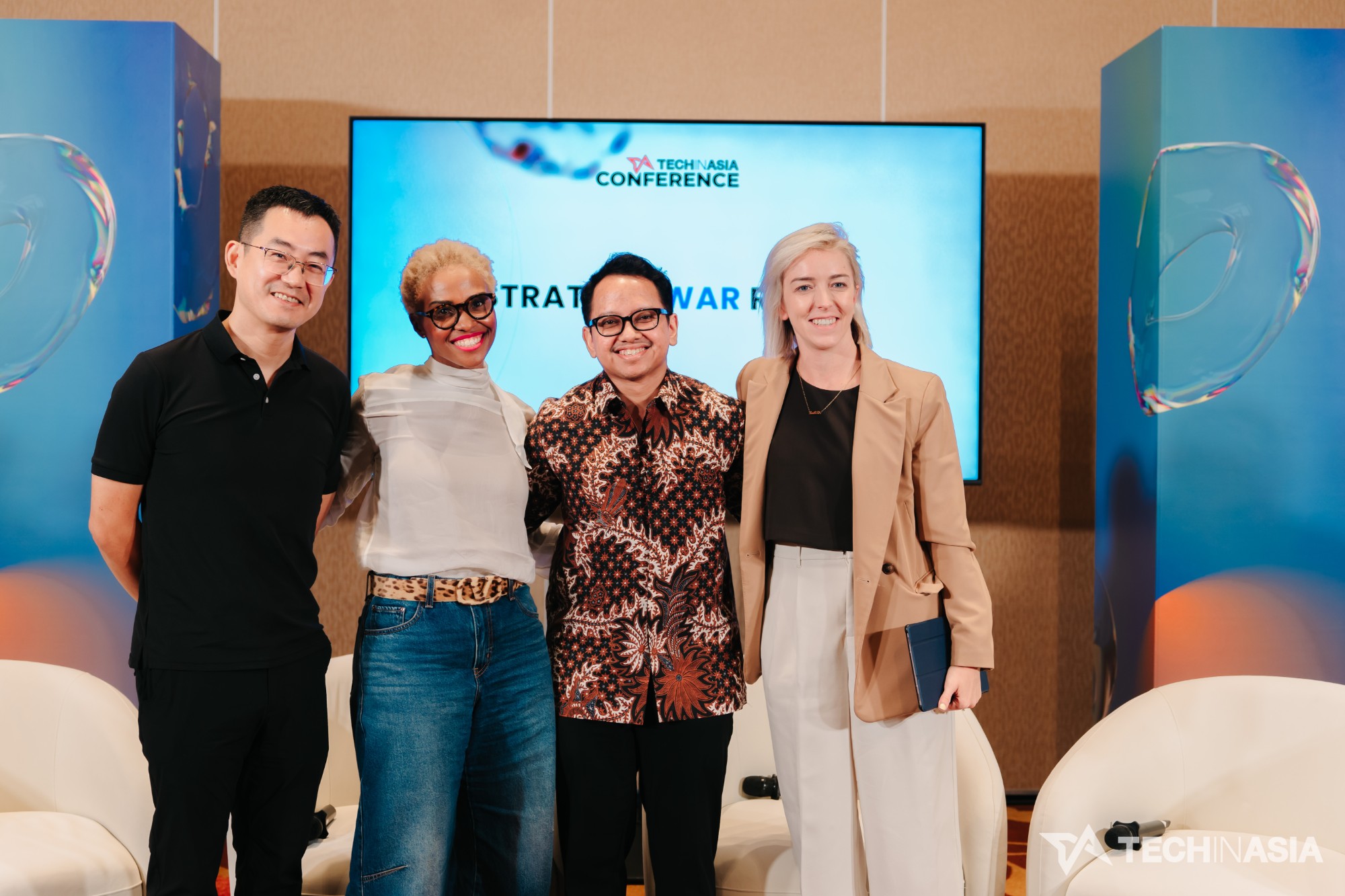
Thanks to the Tech in Asia team for hosting the Strategy War Room, and to Irzan, Shauna, and Sue for the conversation. If you're weighing how to take a voice or agentic AI deployment from one Southeast Asian market to eleven, bring us your workflow and we'll map the right path.
Related news