Card and payment fraud, account takeovers, and authorized push-payment scams have grown across Southeast Asia alongside digital payments. Banks and payment providers use fraud detection systems to flag suspicious transactions, and then need to confirm with the customer quickly. App notifications and SMS help, but many customers don't see them in time, and some suspicious activity needs a conversation. Voice agents can call immediately, at any hour — if the calls are designed to be trusted.
What does a fraud confirmation call need to do?
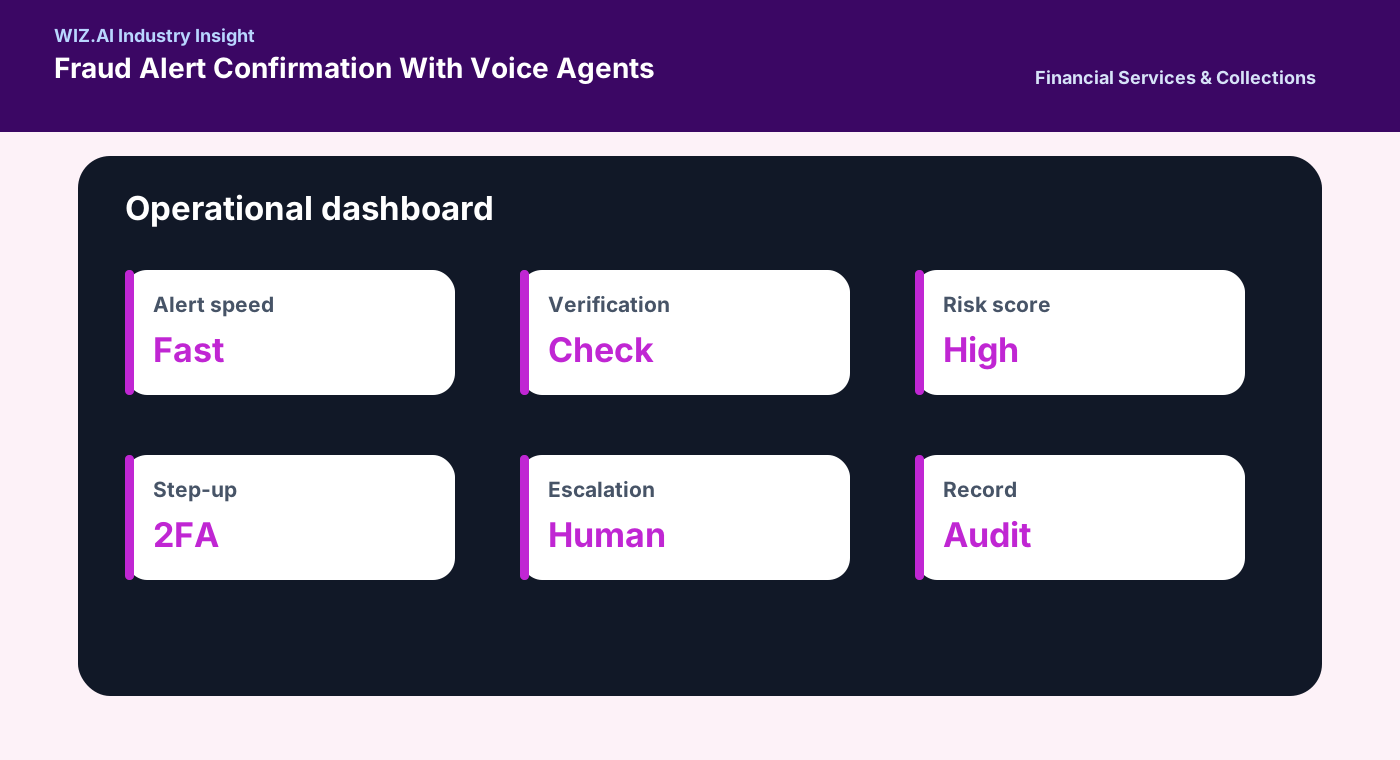
Three things, quickly. Tell the customer which transaction looks suspicious — merchant, amount, time, and the last digits of the card. Ask a simple question: did you make this transaction? Act on the answer: if yes, release the hold; if no, block the card or account and connect the customer to the fraud team or explain next steps. The whole call can take under a minute.
How do you make it distinguishable from a scam?
By following strict rules, consistently, and telling customers what they are. A legitimate fraud alert call should never ask for a PIN, password, OTP, full card number, or CVV; never ask the customer to transfer money to a "safe account"; never ask them to install an app or click an unverified link; and never pressure them. It should identify the institution clearly and tell the customer they can hang up and call back through the number on their card. Saying these rules out loud on every call protects customers from scammers who copy legitimate scripts.
How should the customer's identity be checked?
Lightly, and without exposing sensitive information. The institution already knows which customer it's calling. The agent can confirm it's speaking to the right person by name and a simple non-sensitive check, or rely on the yes/no confirmation itself, which reveals little. Full authentication — for example, to unblock a card — should happen through the official app or an inbound call the customer initiates.
What happens when the customer says no?
Immediate protective action and a clear handoff. Block the card or freeze the relevant function, confirm that it's done, explain how a replacement or recovery works, and connect the customer to a human fraud specialist where needed — especially if money has already left the account. The case should be created automatically with the call details attached.
Why does speed matter so much?
Because fraud losses grow by the minute. A suspicious transaction confirmed in two minutes can stop subsequent fraudulent transactions; one confirmed the next morning often can't. AI agents can call as soon as a transaction is flagged, at any time, and handle spikes in alerts during fraud attacks without queueing.
What about AI-voice scams?
Criminals increasingly use synthetic voices to impersonate institutions and even family members. That makes consistent, verifiable call design more important, not less. Institutions should protect their own voice assets, monitor for impersonation, and educate customers. Voice cloning governance covers the voice side.
How should fraud calls be measured?
By time from flag to customer confirmation, share of alerts confirmed, fraud losses prevented, false-positive release time, and customer feedback. Test regularly with scripted scenarios, including attempts by "customers" to volunteer an OTP, to make sure the agent refuses.
How does WIZ.AI support fraud alert confirmation?
Talkbot places fraud confirmation calls as soon as transactions are flagged, using scripts that never request sensitive data, captures simple confirmations, triggers blocks through bank systems, and escalates to fraud teams. QM verifies every call against security rules. See our Trust page for platform security.
A fraud alert call should protect customers in two ways: from the fraud, and from the scammers who imitate it. Book a demo to see a fraud confirmation flow.
Related insights