Consumer credit has grown fast in Southeast Asia, through banks, multifinance companies, digital lenders, buy-now-pay-later providers, and telecom and utility billing. Collections operations have grown with it. They're labour-intensive, repetitive, and time-sensitive — exactly the profile where AI voice agents add value. GoTo Financial, for example, reached 7 million calls a month with a 40% cost reduction using AI agents in collections. But collections is also regulated and emotionally charged, and AI agents must be designed for that.
Which stages of collections suit AI agents?
Pre-due reminders: a few days before the due date, reminding customers of the amount and how to pay. These prevent many delinquencies. Early-stage collections: the first days or weeks after a missed payment, when most customers simply forgot or need a nudge. AI agents can call every account, capture promises to pay, and send payment links. Promise follow-up: reminding customers before their promised date and following up on broken promises. Later-stage collections, disputes, restructuring negotiations, and hardship cases generally need human collectors, with AI handling routine follow-ups.
How should accounts be segmented?
By delinquency stage, risk, balance, payment history, and preferred contact time. Low-risk customers who usually pay may need only a reminder; higher-risk accounts may need more attempts and earlier escalation. Segmentation also decides tone and script. AI agents make it practical to call every segment, so collectors can focus on accounts where human skill makes the most difference.
What should a collections call include?
Identification of the company and, after appropriate verification, the purpose of the call. The amount due, due date, and any fees, stated clearly. Easy ways to pay — ideally a payment link or virtual account sent by SMS or messaging during the call. A question about when the customer will pay, with the answer captured as a structured promise. Options for customers who can't pay in full. And a respectful close. Indonesian payment reminders covers how this sounds in one market.
How should hardship and vulnerable customers be handled?
With care and a fast route to a human. Signs include job loss, illness, bereavement, confusion, or distress. The agent should recognize these, respond with empathy, avoid pressure, and offer to connect the customer with a team that can discuss options. Many regulators expect firms to identify and treat vulnerable customers fairly. These conversations should never be handled with a standard collections script.
What compliance rules apply?
Rules on contact hours and frequency, disclosure, harassment and threats, third-party disclosure (never discussing debts with anyone other than the customer), data protection, and record-keeping. Regulators across the region, including Indonesia's OJK, have tightened conduct expectations for collections. AI agents should follow approved scripts, respect limits automatically, and be monitored on every call. Collections call compliance covers this in depth.
How should results be measured?
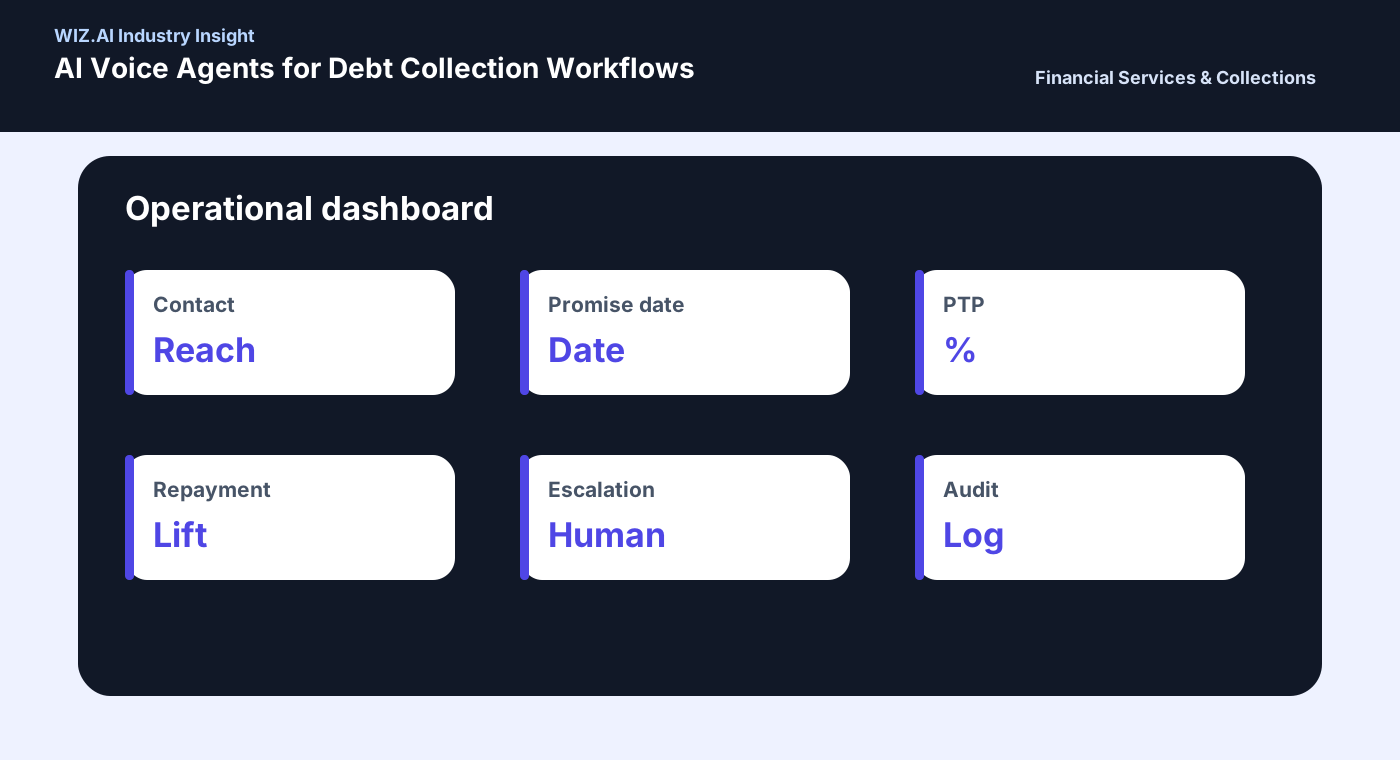
By money collected and accounts cured, against a control or the previous process: payment rate, roll rate into later buckets, promise-to-pay rate and keep rate, and cost per amount collected. Track complaints and opt-outs too. MNC Play reported a 28% higher repayment rate than its previous approach after automating collections outreach.
How do AI agents and human collectors work together?
The AI agent handles volume and consistency; humans handle judgment. Clear handoff rules send disputes, hardship, high balances, and repeated broken promises to collectors, with the call history attached. Collectors spend their time on the conversations that most need them.
How does WIZ.AI support collections?
Talkbot runs pre-due and early-stage collections in local languages, captures promises to pay, sends payment links, and escalates to human teams. QM checks every call against collections policy, and Language Engine recognizes amounts, dates, and payday expressions accurately.
Effective collections is respectful, consistent, and timely. AI agents make that possible at scale. Book a demo to see a collections flow in your language.
Related insights