No AI agent should handle everything. Some conversations need human judgment, empathy, or authority, and some customers simply want a person. The transition from AI to human — the handoff — is where many deployments disappoint customers: long waits, lost context, and repeated questions. Designing it well is essential to a good blended operation. Designing the right blend covers which work goes where; this piece covers the handoff itself.
When should an AI agent hand off?
When the customer asks — clearly and promptly, without making them argue. When the agent isn't confident it understood, after a reasonable attempt to clarify. When the topic is sensitive: complaints, disputes, hardship, bereavement, health, safety, fraud with money lost. When the request is outside scope or needs authority the agent doesn't have. When the conversation is failing: repeated misunderstandings, rising frustration. When policy requires it: regulated advice, high-value decisions. These triggers should be explicit and tested.
What's the difference between warm and cold transfers?
A cold transfer puts the customer in a queue with no context. A warm transfer passes the context to the human — and, ideally, the human sees it before they answer. For most enterprise use, warm transfers should be the default. For urgent cases, a live transfer to an available specialist is best; for less urgent ones, a scheduled callback with context can be better than a long hold.
What context should be passed?
Who the customer is (verified identity), why they called, what they've said (a short summary, not just a transcript), what the agent already did or checked, why the transfer is happening, and any sentiment or vulnerability signals. The summary should be readable in seconds. The human should be able to start with "I see you're calling about…" rather than "How can I help?"
What should the AI agent tell the customer?
The truth: that it's transferring them to a person, why, and roughly how long it will take. If there's a wait, offer a callback. Don't pretend the AI is a human, and don't transfer silently. After hours or when no one is available, explain clearly what will happen next and when.
How should handoffs work after hours?
With predefined routes. Urgent issues — fraud, safety, critical outages — should go to on-call teams. Others should become cases with a callback scheduled for a specific time. "Someone will call you" with no time attached creates repeat contacts and frustration. 24/7 operations covers this.
How should handoff quality be measured?
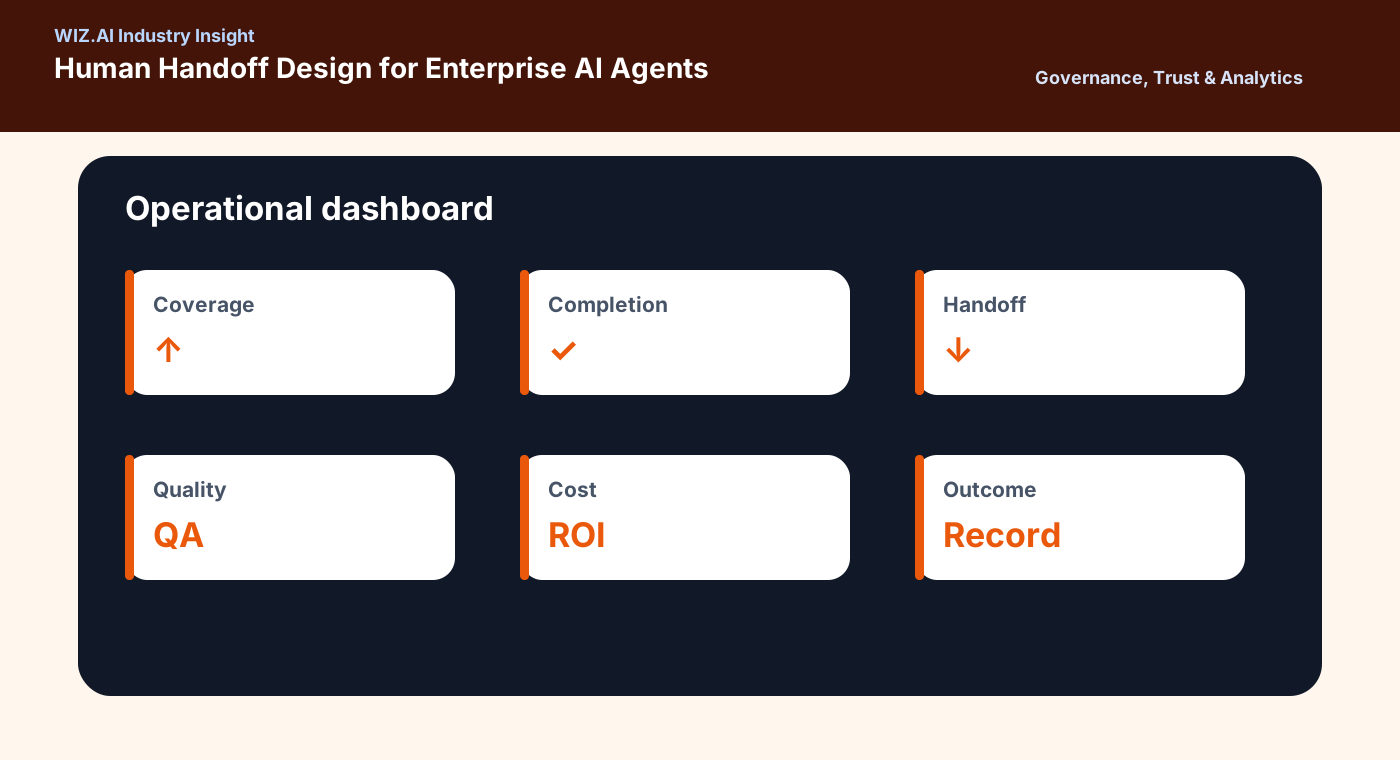
By transfer rate and reasons (are transfers happening for the right reasons?), time to human answer, whether customers had to repeat information, resolution after transfer, and satisfaction for transferred calls. Review transfers where the human found the AI's summary wrong or unhelpful, and transfers that shouldn't have been needed. Both point to improvements.
Can handoff go the other way?
Yes. Human agents can hand routine follow-up back to AI — sending payment details, scheduling a reminder, confirming an appointment — freeing their time. The same context rules apply in reverse. Over time, handoff data shows which conversations the AI could take on and which it should give up. Human review loops covers how that learning works.
How does WIZ.AI handle human handoff?
Wizlynn and Talkbot transfer conversations to human teams based on configurable triggers, with verified identity, a concise summary, actions taken, and sentiment passed to the agent desktop. After-hours rules route urgent cases and schedule callbacks. QM measures handoff quality across all calls.
A great handoff is invisible to the customer. Book a demo to see one.
Related insights