
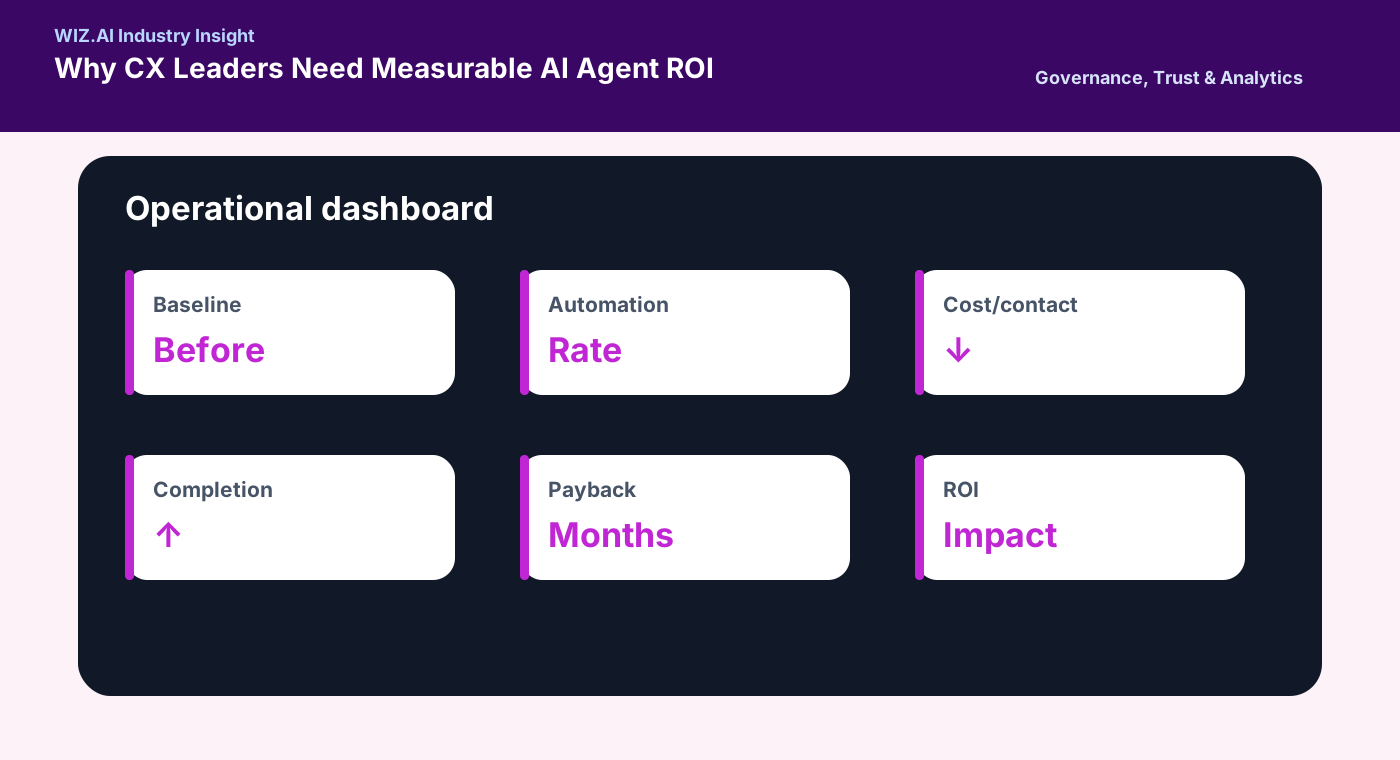
CX leaders are under pressure to improve customer experience while controlling cost. AI agents can help, but only if they are measured against outcomes that business leaders trust. A polished demo is not enough.
Useful metrics include automation rate, resolution rate, average handling time, cost per contact, human handoff rate, CSAT, conversion, activation, and retention. These indicators connect customer experience to operating performance.
WIZ.AI writes for the CX executive who needs to persuade finance, operations, IT, and risk teams. The message is that AI agents are not a side experiment. With the right controls and measurement, they become a repeatable engine for customer growth and service efficiency.
How WIZ.AI Should Frame the Proof
The article should make ROI feel concrete rather than decorative. Many AI-agent pages claim efficiency, but buyers need a path to measurement. WIZ.AI should define the baseline first: current call volume, manual cost, completion rate, response rate, average handling time, and the value of the business outcome. Only then should the article explain what changes after automation.
A Sierra-style structure works well here: describe the operational pressure, show the fast launch or focused use case, then quantify the change. Even when public numbers are not available, the article can teach buyers which metrics to collect and why they matter. This turns the article into a decision tool, not just marketing copy.
Buyer Takeaway
The buyer should understand that AI agents create value in two ways. They reduce avoidable manual work, and they increase the number of customers who complete the desired action. The strongest business case includes both sides: cost efficiency and growth impact.
Related insights
Continue the thread
References
- Everest Group. (2025). Conversational AI and AI agents in CXM products PEAK Matrix 2025. https://www.everestgrp.com/report/egr-2025-21-r-7583/
- Salesforce. (2025). State of service report. https://www.salesforce.com/resources/research-reports/state-of-service/
- Zendesk. (2026). 2026 CX trends report. https://www.zendesk.nl/newsroom/articles/ai-ushers-in-era-of-contextual-intelligence-redefining-customer-experience-in-2026/