
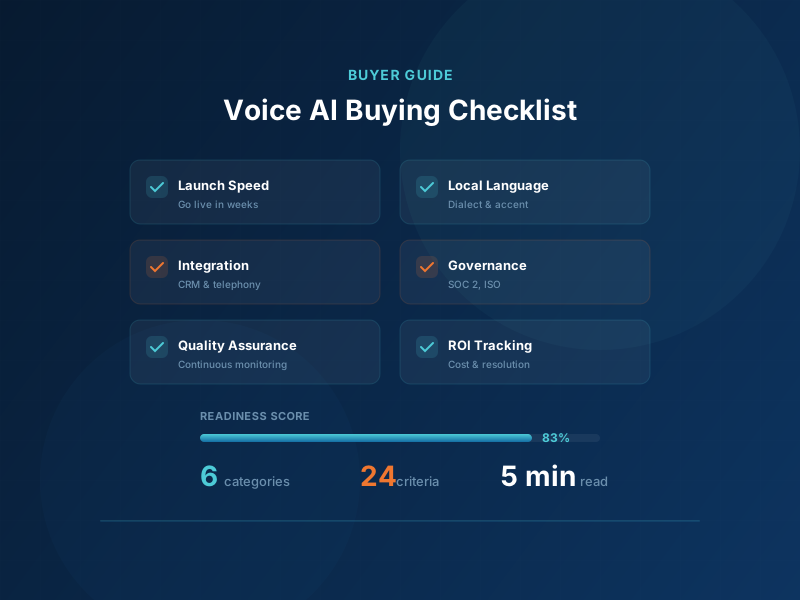
CX leaders should evaluate Voice AI vendors across more than demo quality. A strong checklist includes language coverage, local accent handling, code-switching, use-case design, CRM integration, compliance controls, analytics, human handoff, and post-launch optimization.
The key question is whether the vendor can operate in the buyer’s real environment. Can it support local markets? Can it connect to existing systems? Can it produce measurable results? Can the business team improve journeys without waiting for long technical cycles?
WIZ.AI can turn this checklist into a trust-building article. It gives buyers a clear evaluation standard while positioning WIZ.AI around enterprise readiness, localized voice intelligence, and practical ROI.
How WIZ.AI Should Frame the Proof
The strongest article should read like a compact business case. Start with the operational pressure, name the customer journey, explain why a generic tool is insufficient, and show how WIZ.AI’s AI Agents or Voice Agents create a more reliable path to impact.
The proof should be specific: the industry, the language environment, the workflow, the integration need, and the metric that would convince a buyer. This approach mirrors the competitive pattern seen in leading AI-agent content: short scenarios, clear outcomes, and a platform message that connects the stories.
Buyer Takeaway
The buyer should finish the article with a practical reason to consider WIZ.AI. That reason may be faster launch, local fluency, better automation, measurable ROI, or a stronger fit for Southeast Asian customer operations.
Related insights
Continue the thread
References
- Zendesk. (2026). 2026 CX trends report. https://www.zendesk.nl/newsroom/articles/ai-ushers-in-era-of-contextual-intelligence-redefining-customer-experience-in-2026/
- Forrester. (2025). Conversational AI platforms for customer service landscape, Q4 2025. https://www.forrester.com/report/the-conversational-ai-platforms-for-customer-service-landscape-q4-2025/RES188659
- Everest Group. (2025). Conversational AI and AI agents in CXM products PEAK Matrix 2025. https://www.everestgrp.com/report/egr-2025-21-r-7583/