Enterprises considering AI agents rely heavily on case studies — from vendors, peers, and analysts — to judge what's realistic. Case studies are valuable when they're specific and honest. Many aren't: they report a headline percentage without a baseline, use activity metrics as outcomes, or describe a pilot as if it were production. This piece sets out what a credible case study should contain, both for enterprises writing their own and for buyers reading others'.
What should every case study state?
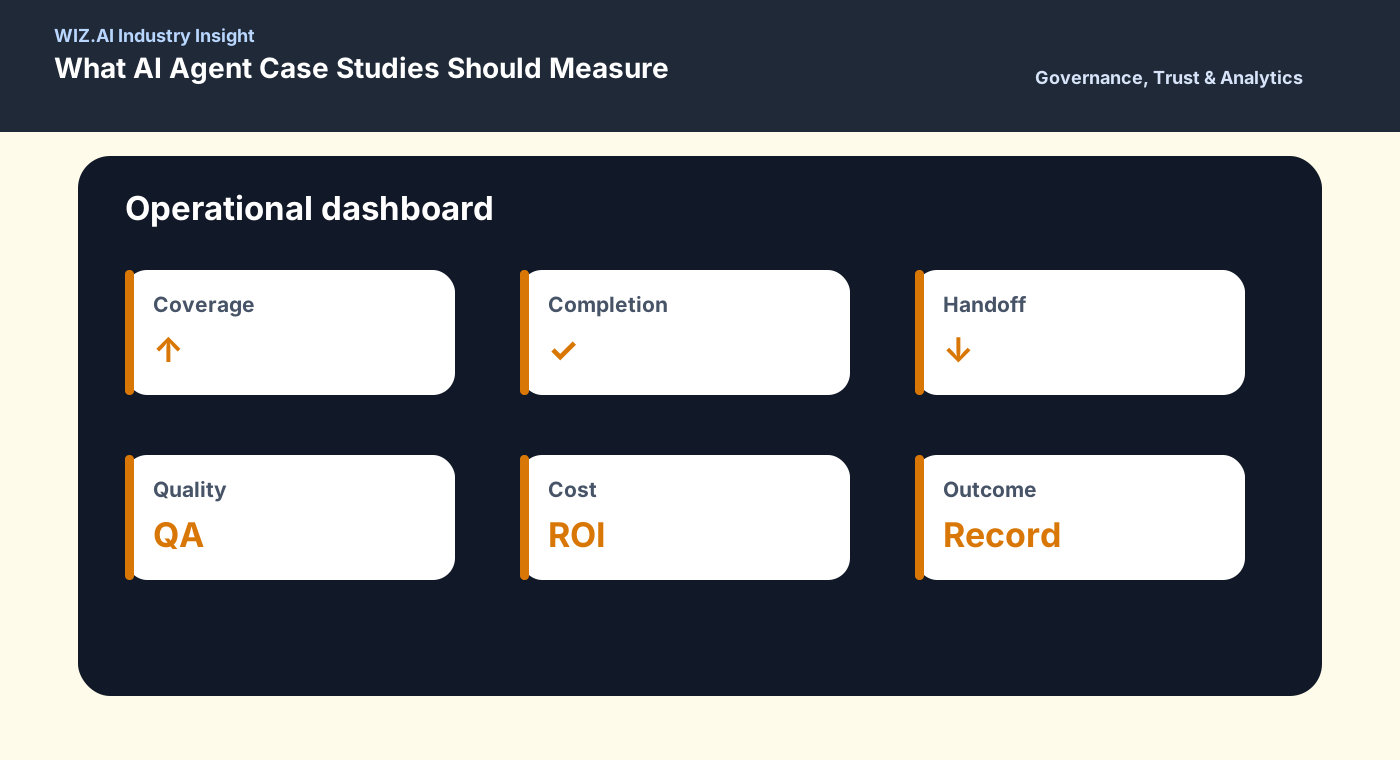
The use case: what the AI agent did, for which customers, in which markets and languages. The scale: number of customers or calls, and whether it was a pilot or production. The time period. The comparison: a baseline (the previous process) or, ideally, a control group measured at the same time. The outcome metrics: business results, not just activity. Without these, a percentage can't be interpreted.
Which outcomes matter most?
The ones tied to business value: payments collected, roll rates, activations, sales, retained customers, resolved contacts, cost per resolution. Activity metrics — calls made, containment, connection rates — are useful context but shouldn't be the headline. A case study that reports both, clearly separated, is more credible. For example, MNC Play's story reports 125,000+ subscribers reached and a 41.7% promise-to-pay rate as activity, and a 28% higher repayment rate as the outcome.
Why does the comparison matter so much?
Because without it, the result could be due to anything: seasonality, a new product, a change in customer mix, or the attention a pilot receives. A control group isolates the AI's effect. Where a control isn't possible, a clearly described baseline from a comparable period, with known changes noted, is the next best option.
Should case studies report quality and risk?
Yes. Business results achieved with more complaints, compliance breaches, or customer dissatisfaction aren't sustainable. Credible case studies report complaint rates, satisfaction, and compliance outcomes alongside the business results — even when they're neutral.
Should costs be included?
Ideally, at least in relative terms: cost per contact or per outcome compared with the previous process. GoTo Financial's case reports a 40% cost reduction at 7 million calls a month — scale and cost together give the result meaning.
How should buyers read vendor case studies?
With questions. Compared to what? Over what period? For which segment, and is it like mine? Is this a pilot or production? What happened to quality and complaints? Can I speak to the customer? A good vendor will answer these directly. Then test the claims on your own data — a case study tells you what's possible, not what you'll get.
How should enterprises write their own?
Agree the measurement design before the deployment, document it, and report results honestly, including what didn't work. Internal case studies are how AI programmes earn further investment; credibility matters more than headline size. Why CX leaders need measurable ROI covers the measurement side.
How does WIZ.AI approach case studies?
WIZ.AI publishes client stories with the outcomes customers have agreed to share, and supports new customers in designing deployments with baselines and control groups so results can be measured credibly. Reporting in Talkbot, Wizlynn, and QM covers outcomes, quality, and compliance together.
The most persuasive case study is one that answers every question before it's asked. Book a demo to discuss how results are measured.
Related insights