Enterprises running AI voice agents can measure almost everything: call counts, durations, intents, outcomes, transfers, latency, recognition confidence, sentiment, compliance checks. The challenge is turning that into reporting people use. A single dashboard trying to serve everyone usually serves no one. The best approach is a small set of views, each designed for a specific audience and the decisions they make.
What do executives need?
Business outcomes and risk, at a glance. For each major use case: the outcome metric (payments collected, activations, resolution, churn avoided) against target and against the control or baseline; cost per outcome; customer satisfaction and complaints; and any significant compliance issues. Trends over months matter more than daily detail. Executives should be able to see whether the AI programme is delivering and where it isn't.
What do operations teams need?
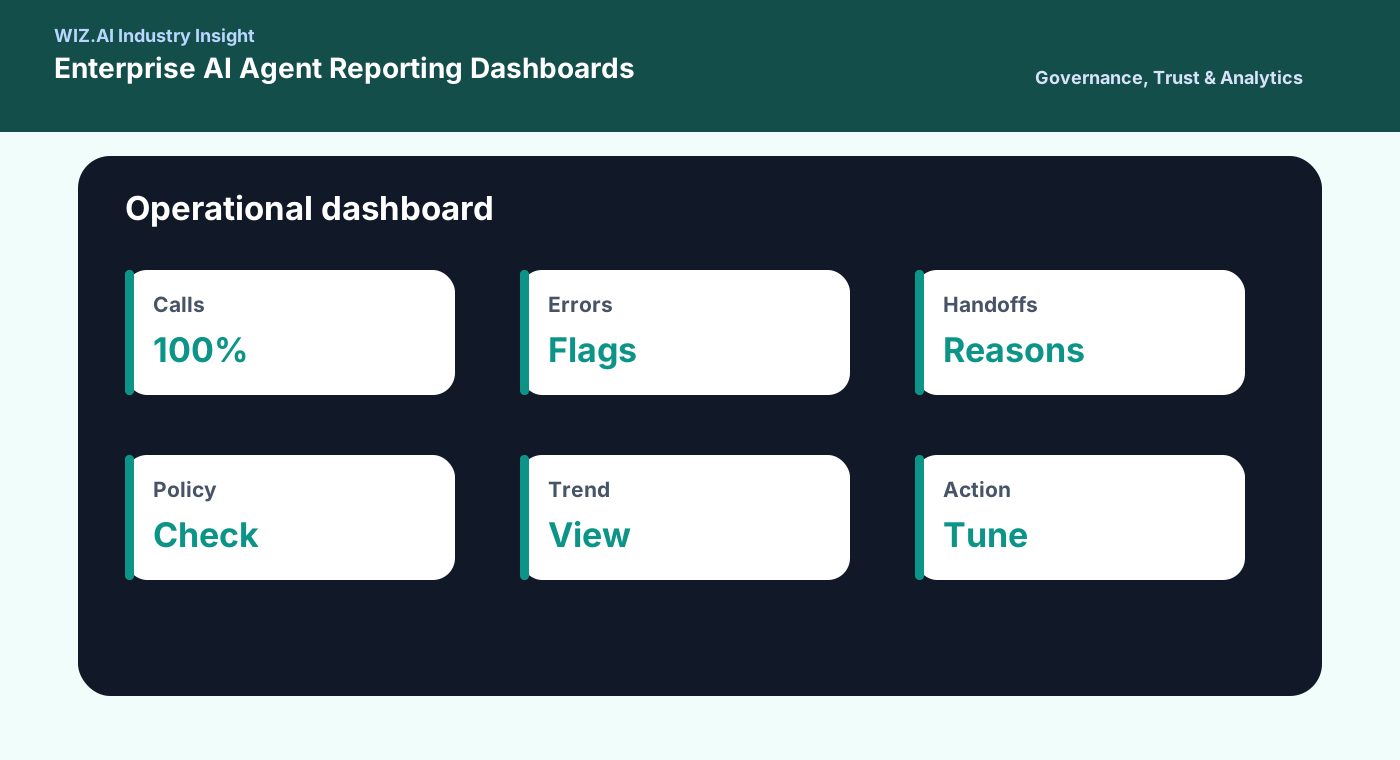
Daily and intraday performance by flow and campaign: volumes, contact rates, completion, outcomes, transfers and their reasons, average handling time, and failures. Drill-downs by segment, language, region, and time of day. Alerts when something changes sharply. Operations teams use these to adjust campaigns, fix scripts, and manage capacity.
What do compliance teams need?
Evidence that rules are being followed: disclosure rates, prohibited-statement detections, contact-hour and frequency compliance, third-party handling, vulnerable-customer escalations, and complaint trends — across all calls, by language and market — plus easy access to flagged calls and audit records.
What do product and CX teams need?
Insight into what customers want and where journeys break: top contact reasons and changes, reasons for failed outcomes (why customers didn't pay, activate, or stay), recurring problems, and customer feedback themes. Voice-of-customer analytics covers this view.
What about technical teams?
System health: response latency at the 95th percentile, error rates, integration failures, recognition confidence, and capacity — the operational signals described in agent observability. These are often best set up as service-level objectives with alerts.
Which metrics should be avoided or contextualized?
Containment rate without resolution. Call volume without outcomes. Averages without segment breakdowns, which hide poor performance for specific groups. Automated sentiment scores without behavioural confirmation. Any metric without a clear definition. These can be shown, but never as headline success measures. Why CX leaders need measurable ROI explains why.
How fresh does the data need to be?
It depends on the audience. Operations and technical teams need near real-time data to react. Executives and compliance usually need daily or weekly views. Outcome metrics that depend on later events — a payment after a promise, an activation after a call — need clear time windows so they're not reported prematurely.
How should definitions be managed?
In one place, shared across dashboards. "Resolution", "contact", "conversion", and "transfer" should mean the same thing everywhere, documented and versioned. Inconsistent definitions are the most common reason different teams report different numbers for the same thing.
How does WIZ.AI support reporting?
Talkbot, Wizlynn, and QM provide reporting on outcomes, quality, compliance, and operations, with drill-downs by flow, segment, language, and region, and data export for enterprise BI tools.
A good dashboard leads to a decision. Book a demo to see AI agent reporting.
Related insights